A lot of my time with Spiky Carrot is spent out and about. I'm meeting new people, calling into venues to tell them what's happening, talking to business owners or running one of our Carrot Club meet-ups. One of the things I enjoy about it is that you start to notice what's actually happening around the local patch rather than just seeing it through a screen.
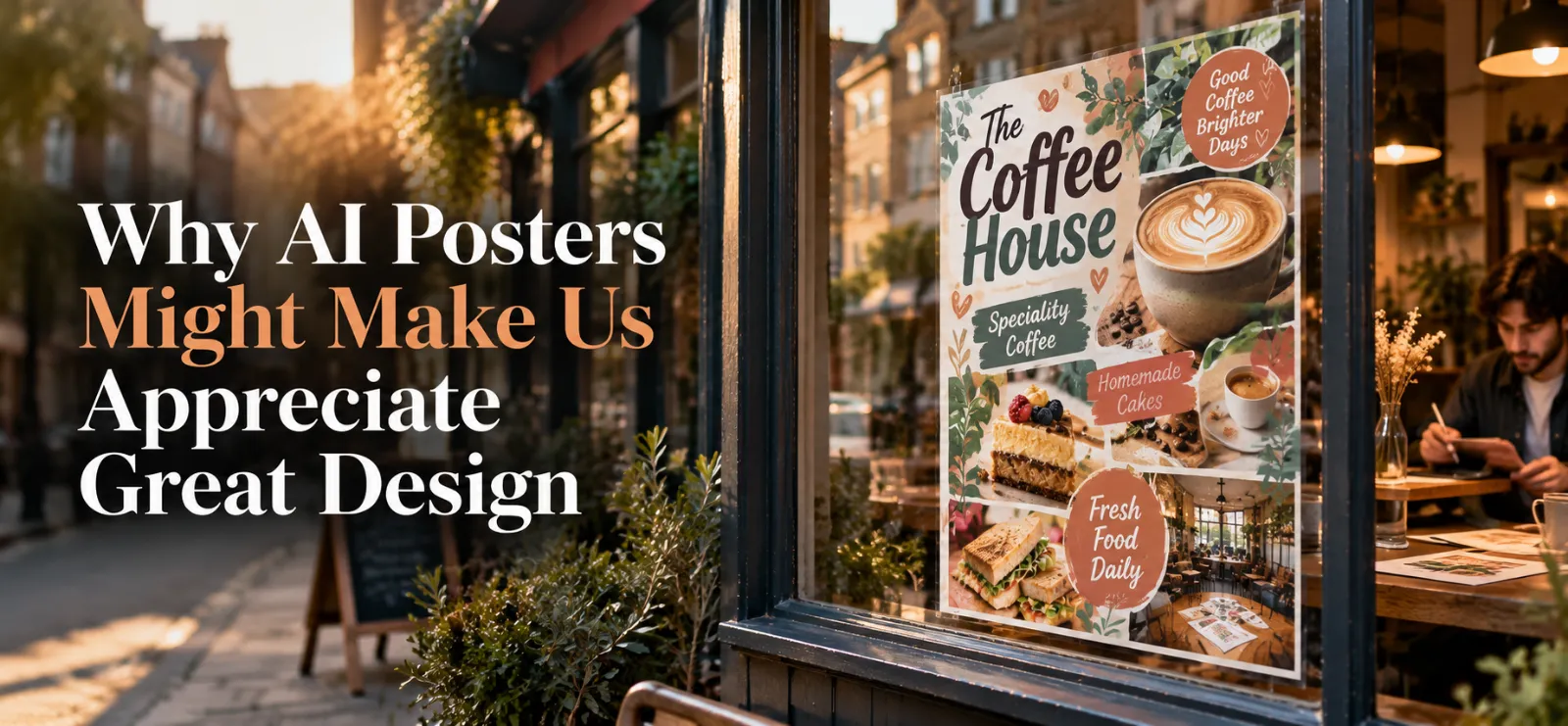
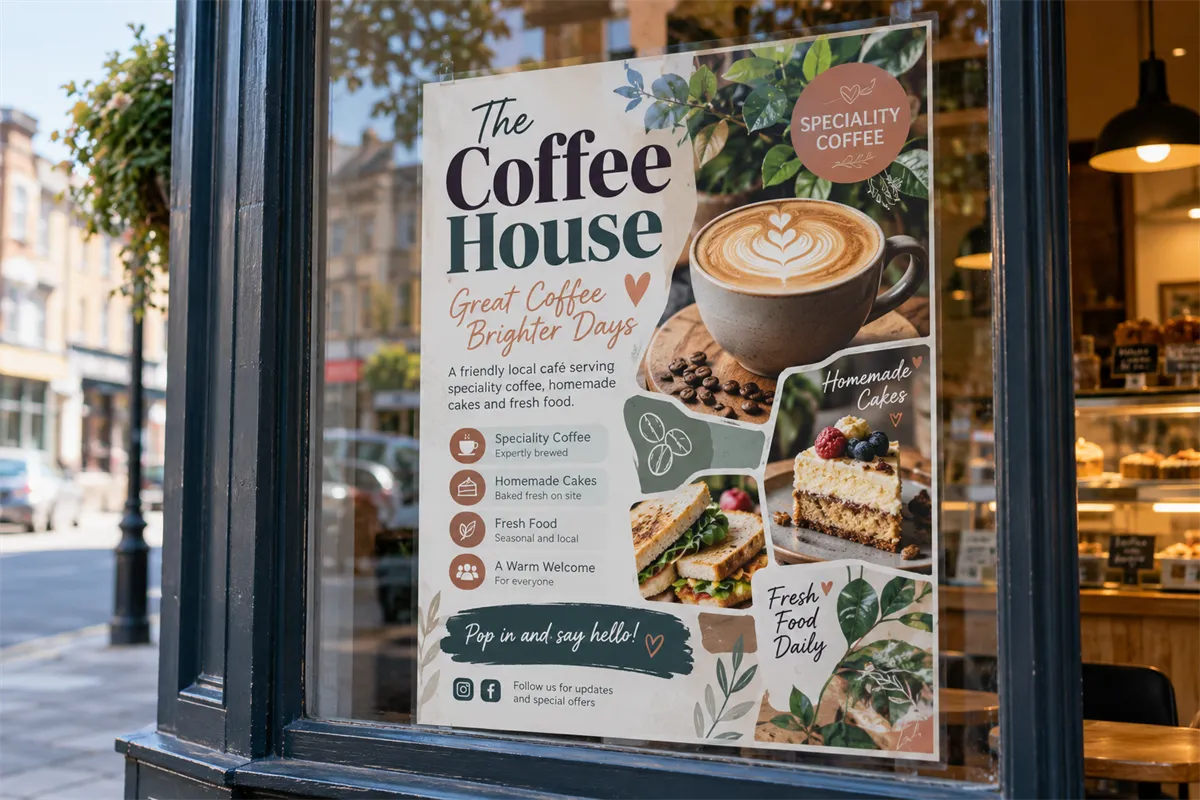
Recently, I've started noticing more and more AI-generated posters in business windows.
I've also noticed quite a few conversations about them on social media, with people having very different reactions. Some seem impressed by what AI can produce, while others question whether these designs really have the same character as something created by a designer.
I'll be honest, I'm generally not a fan of AI-generated graphic posters myself.
A lot of them feel more like information graphics that have been put into a poster. There can be lots of copy, lots of visual elements and lots of information competing for attention. They might look polished, but they can also feel strangely familiar, as though you've seen the same poster several times before with a different business name on it.
But the more I see them, the more I've started thinking about something slightly unexpected.
Perhaps AI-generated posters could actually help us appreciate great human design more.
When Everyone Can Make A Poster
There is no doubt that AI has made creating visual content much easier. You can describe an idea, choose a style and have something produced in seconds, without needing years of experience with professional design software.
For a small business, I can understand the attraction. If you need something quickly and don't have the budget to work with a designer, having another way to create visual content is useful. AI has opened up creative tools to people who might never previously have had access to them.
But being able to create a poster and understanding what makes a great poster are two very different things.
A poster isn't necessarily there to tell somebody everything about a business. Sometimes it needs to make them stop. Sometimes it needs one strong idea that creates curiosity or a visual that sticks in their mind long enough for them to wonder who is behind it.
That's one of the things great designers are good at. They understand that design isn't simply about adding information. It is also about knowing what to leave out.
And knowing what to leave out can be much harder than finding something else to put in.
The More We See, The More We Notice
This is where my thinking about AI posters becomes less negative.
Although I don't particularly like a lot of the AI-generated design I'm seeing, people are seeing more of it. And when we see enough of something, we start recognising the patterns.
You might not know anything about graphic design, but after seeing hundreds of similar layouts, you can probably start to sense when something feels familiar. You notice when the same kind of imagery keeps appearing, when there is too much copy or when a design looks polished but doesn't really seem to belong to the business it represents.
Perhaps we're becoming more visually aware without even realising it.
A few years ago, someone might have looked at two posters and simply thought that both looked professional. Now, after being exposed to so much generated imagery, perhaps we're more likely to notice when one has something different about it.
Maybe it's the illustration. Maybe it's the typography. Maybe it's the way the space has been used. Or perhaps it's simply that the whole thing feels like someone has actually thought about it.
That is what I find interesting.
AI may be making design more accessible, but it could also be making us more aware of the difference between something that has been produced and something that has been properly considered.
Great Design Has A Person Behind It
When we look at a finished piece of design, we see the result. We don't necessarily see the person behind it or everything they brought to the process.
A good designer isn't simply someone who knows how to use design software. They've spent years developing an eye for what works. They've looked at thousands of examples, tried things that didn't work, learnt about typography, colour, composition, photography and illustration, and gradually developed their own judgement.
More importantly, they learn how to understand people.
When a designer works with a business, they should be thinking about more than what colour looks nice or which image fills the space. They need to understand the business, the people behind it, who it wants to reach and what it actually wants to communicate.
Those answers influence the creative decisions that follow.
The finished poster might look simple, but the thinking behind that simplicity can be quite complicated.
That's part of the value of a great creative.
This Is Something I Think About With Our Own Posters
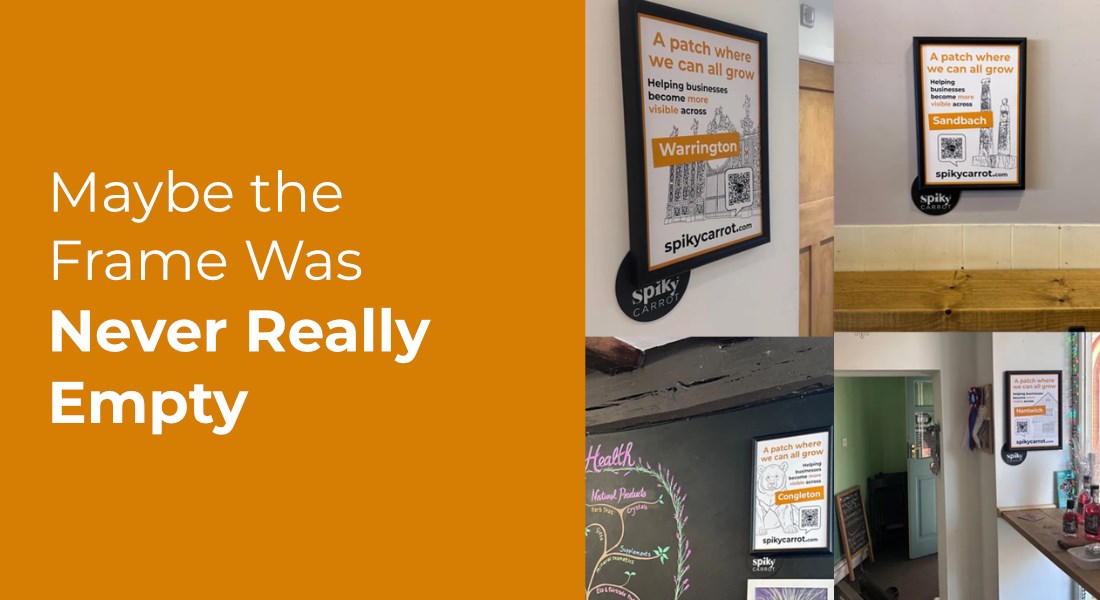
It's also why I've thought quite carefully about how we approach the posters we create through Spiky Carrot.
We could use AI to create them. It would certainly be quicker, and we could produce countless variations very easily.
But I don't want our posters to simply be another example of a business putting a polished graphic in a window.
We want to understand the business first.
What does the owner actually want people to know? What makes them different? What is their personality? What should somebody remember after seeing the poster? What can we communicate visually without trying to cram everything onto the page?
Those questions become part of the creative process.
The poster should feel connected to the business rather than looking like something that could have been made for anyone.
That takes more time, but I don't think that time is wasted. In fact, I think the time spent understanding the business is part of the design itself.
When Creating Becomes Easy, Craftsmanship Matters More
Perhaps this is the bigger change AI could bring to creative work.
When anyone can produce an image in seconds, the ability to produce an image stops being particularly special. What becomes more interesting is the person who knows what image should be produced and why.
You see something similar with other forms of craftsmanship. You don't need to be a furniture maker to appreciate the difference between something carefully made and something mass-produced. You don't need to be a photographer to recognise when a photograph has captured something special.
You can sense that somebody cared about the result.
Design can work in exactly the same way.
There is something different about seeing work that has personality. You can sense that somebody made deliberate decisions rather than simply filling a space.
And perhaps the more generated content we see, the easier that difference becomes to recognise.
I'm Not Saying Human Design Is Automatically Better
There is an important distinction here.
I'm not saying that anything made by a human is automatically better than something created using AI. That would be far too simple.
There are talented creatives using AI as part of their process, and I'm sure we'll see some fantastic work created with it. The technology itself isn't really what interests me.
What interests me is what happens when the ability to create something becomes so easy that the act of creating it is no longer the impressive part.
If everyone can make something that looks good, then looking good alone isn't necessarily enough.
It needs to have a reason for being there. It needs to feel relevant to the business. It needs to have some personality behind it.
That's where human creative judgement becomes interesting.
Independent Businesses Have Something Worth Communicating
I think this is particularly relevant to independent businesses because every business has something that can't simply be generated from a template.
There is a reason the owner started it. There is a way they work, a story behind it, things they care about and experiences that have shaped the business. There are little details that make it different from the business down the road.
Those things already exist.
Good creative work can bring them out.
That's why I think the relationship between an independent business and a creative person can be so valuable. The creative isn't simply producing something attractive. They're helping the business communicate something that already exists within it.
That is very different from simply asking a tool to make a professional-looking poster.
Maybe AI Will Make Great Design Easier To Spot
So I've ended up in a slightly strange position.
I still don't particularly like a lot of the AI-generated posters I see in local windows. Too often they feel like information graphics, with too much copy and too many familiar visual ideas competing for attention.
But the more I see them, the more I wonder whether they might actually be helping us.
Perhaps we're becoming more aware of what design looks like when it has been created quickly and generically. Perhaps that makes us more sensitive to the work that feels individual.
The unusual choice. The clever idea. The restraint. The personality. The fact that someone has taken the time to understand what they're designing for rather than simply asking a tool to make something that looks professional.
And if that happens, maybe AI will have done something quite unexpected for the creative industries.
It may have made us appreciate human creativity more.
Because when everyone can create something, the real value might not be in being able to create it. It might be in knowing what is worth creating in the first place.
And perhaps that's something worth remembering the next time you walk past a poster in a local business window.
Do you just see the finished graphic, or can you see the thought, experience and creativity behind it?
Because maybe, as AI makes design easier, we're finally going to get better at noticing the difference.