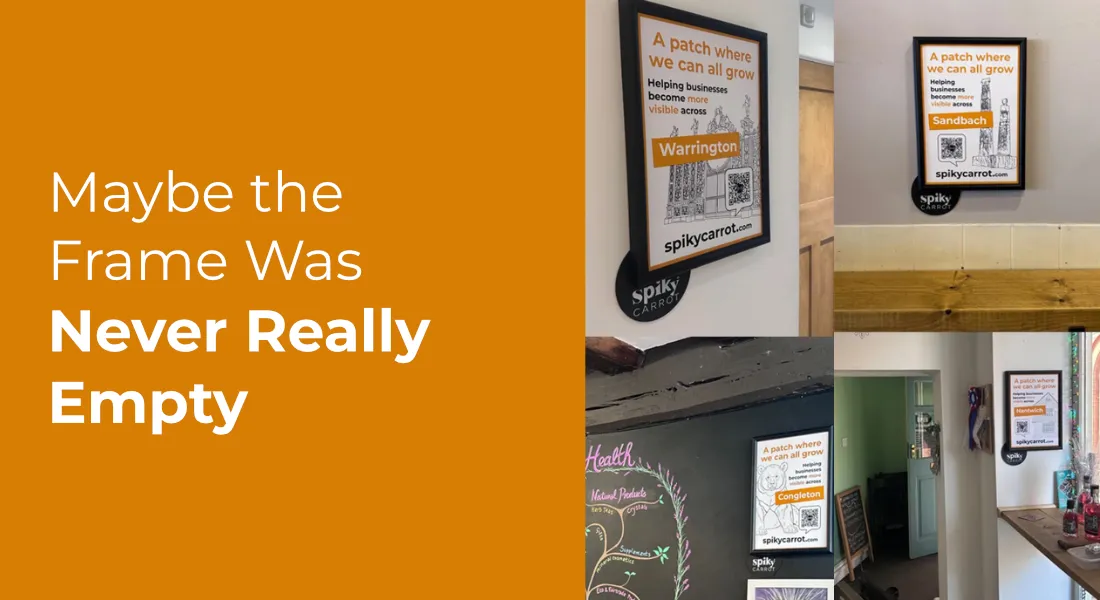
If you look at most advertising businesses, whether that's billboard owners, physical advertising spaces or digital platforms, there is something you'll notice quite often when they have an empty space. Usually, the message is pretty simple: "Advertise here."
When I first started Spiky Carrot, guess what you saw on our first posters?
Exactly the same thing.
Looking back, it's quite ironic because an advertising business was never really what I wanted Spiky Carrot to become. At the time, though, I was thinking about those empty frames in the same way. If there wasn't a campaign running, the obvious thing was to tell people that the space was available.
But Spiky Carrot has changed quite a lot since those first posters went into venues. What started around local advertising has evolved into what I now see as a growth and visibility network for independent businesses. We've built the idea of the Patch, developed our trusted venue network, created business profiles, the magazine, meet-ups and much more around the original idea.
And at some point, I realised the posters needed to evolve with it.
What should an empty frame actually do?
Over the last few years, I've been able to see our posters in real venues and learn from the data I've collected around how people interact with Spiky Carrot.
That changed how I looked at the holding posters.
If a campaign isn't running, the frame doesn't suddenly disappear. It's still sitting inside a real local business, being seen by people as they go about their day. So why should its only job be to tell them that somebody could advertise there?
I started looking at new designs and trying to work out how I could bring more of Spiky Carrot into them. I wanted to bring the carrots into the designs and make the posters feel more connected to the brand.
But I just couldn't quite crack it.
After staring at the designs for a while, I decided to leave them alone for a few days. Sometimes you need to stop trying to solve something and let the idea sit.
And while I was doing that, something else was taking shape.
Then the Patch changed my thinking
The Patch was starting to become a much bigger part of Spiky Carrot, particularly the idea of creating pages around the individual areas where our businesses are located.
That made me look at the posters differently.
Instead of asking myself how I could create a better generic holding poster, I started asking a much better question:
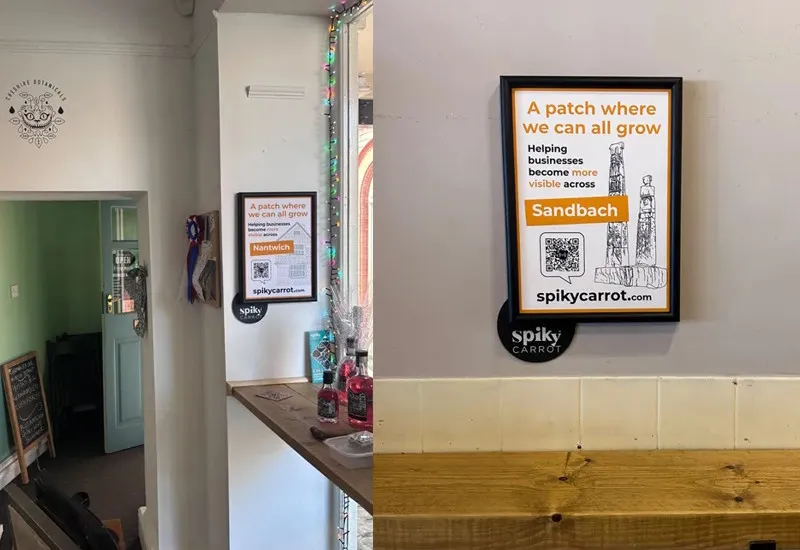
Why not make the holding poster about the Patch?
And then I took that one step further.
Why not make it about the specific area where the frame is actually sitting?
That felt much more like Spiky Carrot.
Rather than having a single poster that could be moved between venues, each area could have its own version. Something that connects the brand with the place where people are actually seeing it.
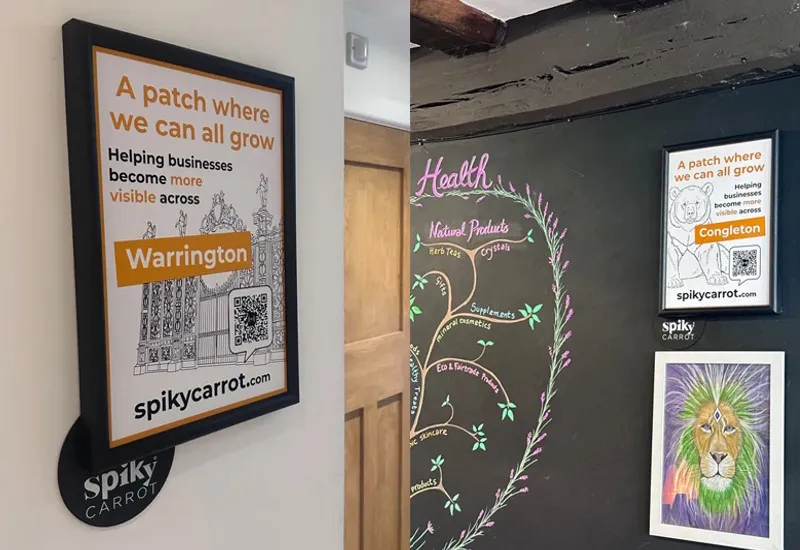
Every area has something people recognise. It could be an iconic building, a canal, a statue, a street or another landmark that immediately makes you think of that particular place.
So why not use that?
The poster can still be unmistakably Spiky Carrot, but it can also feel like it belongs to that local Patch.
For example, Congleton Bear, Sandbach Saxon Crosses, Warrington's golden gates.
And then I realised something else
The more I thought about it, the more I realised that I didn't actually need to explain that the frame was available for advertising.
Spiky Carrot itself had become the thing that could create curiosity.
Someone might see the poster and wonder what Spiky Carrot is, or why it's connected to their local area. That curiosity can lead them to check it out.
And when they do, they don't just discover Spiky Carrot.
They discover the Patch.
They discover the businesses within it!
They can find business profiles, stories, the magazine, meet-ups and the other independent businesses that are becoming part of the network.
That suddenly makes the holding poster much more powerful.
It isn't there to advertise an empty advertising space.
It's there to introduce people to what is already happening around it.
Maybe the frame was never really empty
I think that's the biggest change in my thinking.
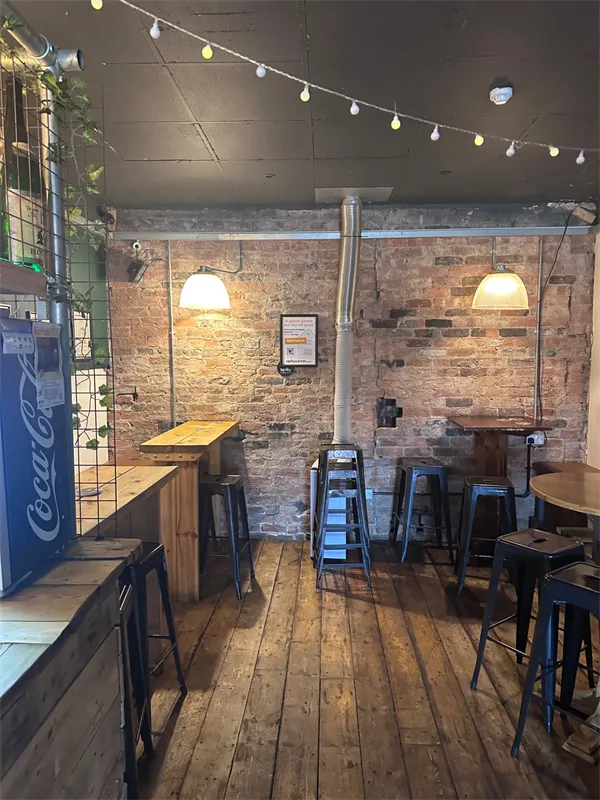
I used to see an empty frame as an advertising opportunity waiting to be filled. Now I see it as a piece of physical visibility that already has value simply because it is there.
It's in a real venue. It's in a real local area. People are already seeing it.
So rather than using that space to tell people "Advertise here", why not use it to build recognition for Spiky Carrot and the Patch around it?
The frame hasn't changed.
The venue hasn't changed.
What's changed is how I think about what that space is for.
And perhaps that's one of the things I've learnt while building Spiky Carrot. Sometimes the biggest change isn't about creating something completely new. It's about looking at something you've already built and asking whether you're still using it in the way that makes sense today.
So, no more "Advertise here".
Instead, the empty frame can become another way for people to discover their local Patch, discover Spiky Carrot and, perhaps most importantly, discover the independent businesses already growing within it.
Maybe the frame was never really empty after all.